 MGL Logistics team
Starting and growing a small business in Ghana already comes with enough challenges.
You have suppliers to deal with, customers to satisfy, employees to manage, marketing to pay for, and somehow you still have to remember that the electricity bill exists.
Then comes logistics.
For many small businesses, shipping isn’t just another expense. It can directly affect product pricing, profit margins, inventory availability, and customer satisfaction.
And sometimes, the biggest losses don’t come from what you’re paying your supplier.
They come from mistakes made while getting the products from the supplier to your business.
Here are five logistics mistakes that can quietly eat into your profit—and how to avoid them.
1. Choosing a Logistics Provider Based Only on Price
Let’s start with the obvious one.
Everyone wants a cheap shipping quote.
That’s completely understandable.
But there’s a difference between cheap shipping and cost-effective shipping.
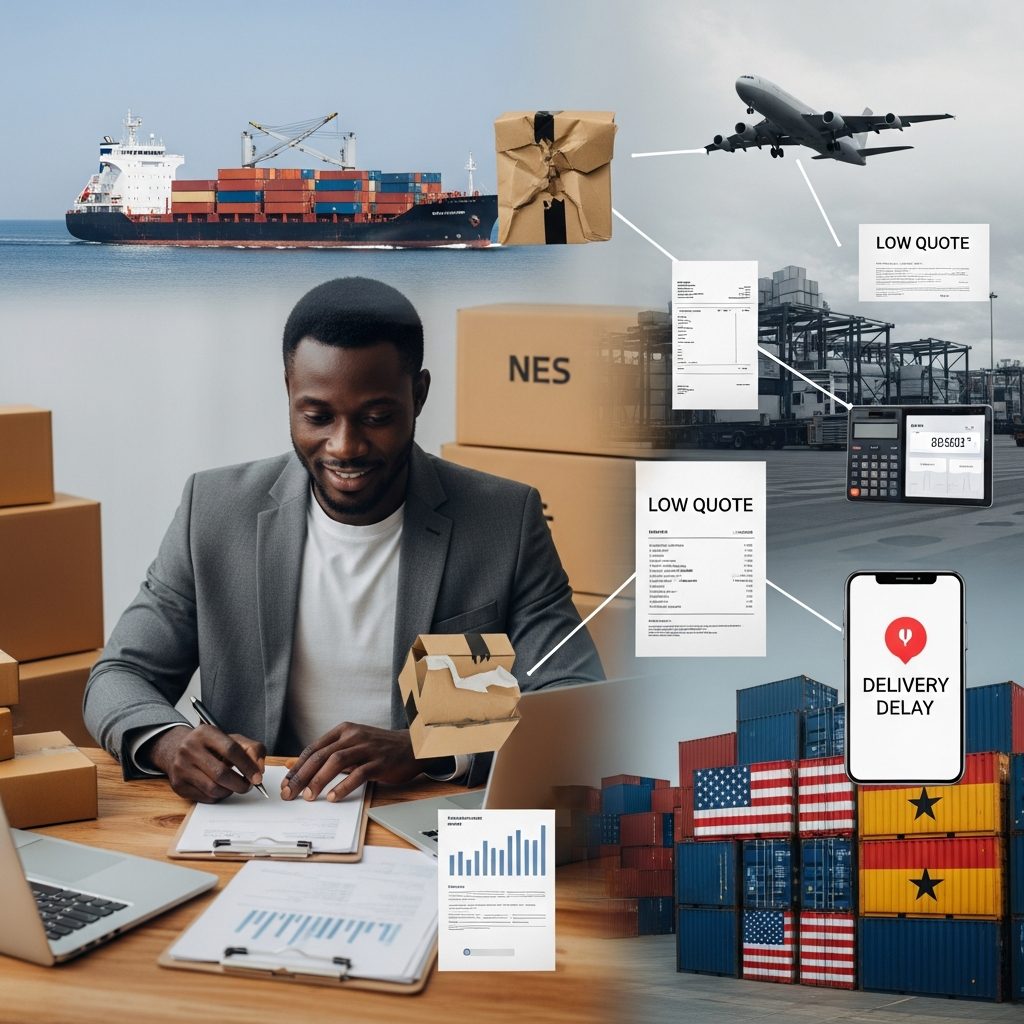
A provider may offer a very low initial price, but if that quote doesn’t account for other charges, you could eventually pay more through:
- Handling fees
- Storage charges
- Customs-related costs
- Delivery charges
- Additional processing fees
Suddenly, the “cheapest” option isn’t looking so cheap anymore.
It’s like buying a phone because it’s cheaper, then discovering the charger, case, battery, and perhaps the ability to make phone calls are all sold separately.
What to do instead
Don’t ask only:
“How much is shipping?”
Also ask:
“What exactly does this price include?”
A good logistics provider should be able to explain the costs clearly so you can calculate the real cost of getting your products to Ghana.
2. Poor Packaging
Your products may be valuable, but international transportation doesn’t know that.
Cargo can pass through warehouses, trucks, ports, airports, and multiple handling points before reaching Ghana.
If your products aren’t packaged properly, they can be exposed to:
- Breakage
- Scratches
- Moisture
- Crushing
- Internal movement
- Handling damage
And when damaged goods arrive, the financial impact goes beyond the damaged product.
You may also have:
- Replacement costs
- Refunds
- Customer complaints
- Lost sales
- Damage to your reputation
What to do instead
Use packaging appropriate for the type of cargo you’re shipping.
Fragile products need cushioning.
Electronics need protection against impact and moisture.
Heavy products need strong packaging capable of handling their weight.
Good packaging isn’t an unnecessary expense.
It’s insurance against avoidable problems.
3. Incorrect or Incomplete Documentation
This one may not look like a major problem when you’re preparing your shipment.
Until customs asks a question you weren’t expecting.
Incorrect or incomplete documentation can contribute to:
- Clearance delays
- Additional inspections
- Extra costs
- Shipment complications
For a small business, even a few days of delay can matter.
Imagine you’re expecting 100 units of a product that’s already selling quickly. Your stock runs out, but the replacement shipment is delayed because of a documentation issue.
Your customers don’t hear:
“There was an issue with our import documentation.”
They hear:
“We don’t have it.”
And some of them may simply buy from someone else.
What to do instead
Before shipping, make sure the required information and documents are accurate and complete.
If you’re unsure about the requirements, work with an experienced logistics provider who can guide you through the process.
It’s much easier to fix paperwork before departure than after your cargo is already in transit.

4. Not Planning Shipping Costs Before Setting Your Selling Price
This is a big one for new importers.
You find a product for a great price.
You calculate your expected selling price.
You think:
“This business is going to make money.”
Then the shipping bill arrives.
Suddenly, your impressive profit margin has gone for a short walk.
Shipping should be included in your business calculations before you place the order.
Your landed cost may involve more than the supplier’s price.
Depending on the shipment, you may need to consider:
- Product cost
- Freight
- Handling
- Customs-related costs
- Storage, where applicable
- Final delivery
- Other logistics expenses
What to do instead
Calculate your estimated total landed cost before deciding how much to sell your products for.
That way, you know whether you’re actually making a profit.
Because revenue can look beautiful on paper.
Profit is what pays the bills.
5. Using an Unreliable Logistics Provider
This may be the most expensive mistake of all.
A logistics provider isn’t simply responsible for moving your cargo.
They’re also responsible for communication, coordination, documentation support, tracking, and problem-solving throughout the shipping process.
An unreliable provider can create problems such as:
- Poor communication
- Missed updates
- Delayed shipments
- Lack of tracking visibility
- Unclear charges
- Slow response when something goes wrong
And when your inventory is delayed, your business can feel the impact immediately.
What to do instead
Look for a logistics provider that offers:
- Clear communication
- Shipment tracking
- Transparent pricing
- Professional cargo handling
- Documentation guidance
- Reliable delivery coordination
- Experience with your shipping route
The goal isn’t simply to find someone who can move your cargo.
It’s to find a logistics partner who understands how that cargo affects your business.
How Better Logistics Protects Your Profit
Good logistics can help your business:
Control Costs
Better planning can help you identify unnecessary expenses before they become problems.
Maintain Inventory
Reliable shipping helps you keep products available when customers need them.
Improve Customer Satisfaction
When orders arrive as expected, customers are more likely to trust your business.
Protect Your Reputation
Consistent delivery and product availability create a better customer experience.
Make Better Business Decisions
When you understand your real shipping costs, you can price products more confidently and plan your inventory more effectively.
How MGL Logistics Helps Ghanaian Businesses Ship Smarter
At MGL Logistics, we understand that shipping costs aren’t just numbers on an invoice.
They affect your entire business.
That’s why we help businesses make better logistics decisions through:
- Air freight
- Ocean freight
- Cargo consolidation
- Warehouse services
- Shipment tracking
- Documentation guidance
- Import and export logistics
- Delivery coordination
Whether you’re an online seller, retailer, importer, or growing business, our goal is to help you move your products efficiently while keeping the shipping process clear and manageable.
Because the goal isn’t simply to get your cargo to Ghana.
It’s to get it there in a way that makes business sense.
Final Thoughts
Logistics mistakes rarely announce themselves as major problems.
They usually start small:
A slightly cheaper quote.
A poorly packed box.
One missing document.
A shipping cost you didn’t include in your calculations.
A logistics provider who doesn’t communicate properly.
Then, one by one, those small mistakes start eating into your profit.
The good news is that they’re avoidable.
Plan your shipping costs. Package your products properly. Get your documentation right. Compare the full cost—not just the headline price. And work with a logistics provider you can trust.
At MGL Logistics, we’re committed to helping Ghanaian businesses ship with greater clarity, reliability, and confidence.
Because your profit should come from growing your business—not from discovering expensive logistics mistakes after the fact.