
 MGL Logistics team
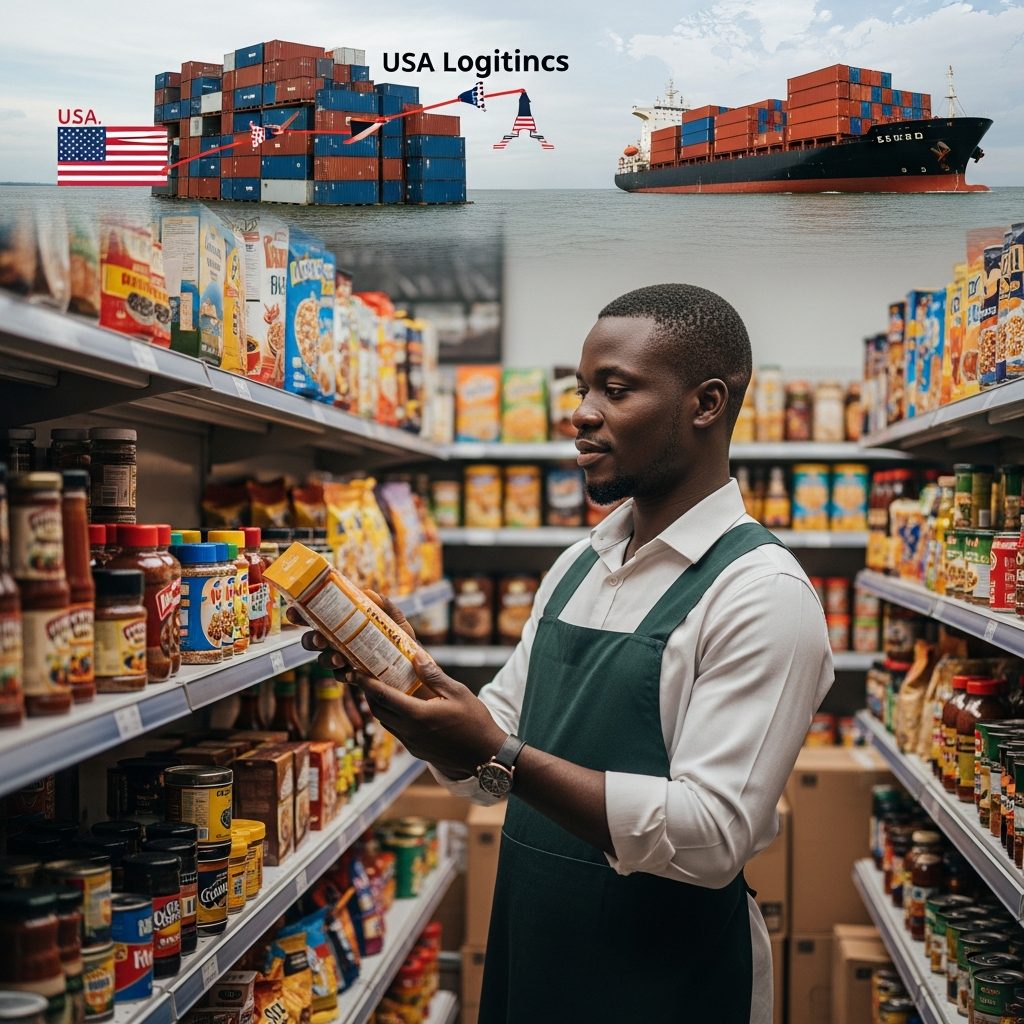
If you run an African grocery store, food business, online shop, or specialty-products business in Ghana, importing food products from the USA can open up a lot of opportunities.
There is a huge market for familiar brands, specialty foods, packaged snacks, spices, cereals, sauces, beverages, and other products that customers may struggle to find locally.
But food is different from shipping a phone, a pair of shoes, or a piece of furniture.
You can’t simply put food in a box, send it across the Atlantic, and hope everybody is happy when it arrives.
Food has safety, packaging, shelf-life, labelling, storage, documentation, and regulatory considerations that need to be handled properly.
And if you’re running a business, there’s another important question:
Will the product still be profitable after all the shipping and import costs are added?
Let’s break down what small businesses should consider before shipping food products from the USA to Ghana.
First: Know What You’re Shipping
Before placing an order, identify exactly what type of food product you’re importing.
For example:
- Packaged snacks
- Cereals
- Spices
- Sauces
- Dry food products
- Canned or shelf-stable foods
- Specialty African food products
- Other commercially packaged foods
Different food categories can have different requirements.
This is important because you shouldn’t assume that if one food product can be imported easily, every other food product will follow exactly the same process.
When in doubt, check the requirements for the specific product before buying it.
That’s much better than discovering the rules after your cargo has already arrived.
Food Shipping Requires More Planning
When you’re shipping ordinary merchandise, you mainly worry about getting the product from point A to point B.
With food, there’s another question:
Will the product still be suitable for sale when it gets there?
That means you need to think about:
- Shelf life
- Packaging
- Storage conditions
- Transit time
- Temperature sensitivity
- Product labelling
- Regulatory requirements
For a small food business, poor planning can turn potentially profitable inventory into expensive inventory sitting on the wrong side of a customs process.
Shelf Life Matters
This is one of the biggest things food businesses need to consider.
Before purchasing food products for import, check the expiry date and remaining shelf life.
You don’t want to buy a large quantity of products only to discover that a significant portion of their shelf life has already been used before the shipment even reaches Ghana.
That can create serious problems for:
- Inventory planning
- Sales
- Customer confidence
- Profit margins
And nobody wants to run a promotion that says:
“Buy one, get one free before it expires.”
Good inventory planning starts before you place the order.
Packaging Is Your Food’s First Line of Defence
Food products can be exposed to pressure, movement, moisture, heat, and repeated handling during international transportation.
That means packaging matters.
Make sure products are properly packaged and protected before they’re handed over for shipping.
For commercially packaged foods, check that:
- Containers are intact
- Seals are secure
- Packaging isn’t damaged
- Labels remain readable
- Products are protected from unnecessary exposure
If you’re shipping multiple products together, don’t simply throw everything into one large box.
Organize the shipment properly so that products aren’t unnecessarily crushed or damaged during handling.
Don’t Ignore Labelling
For businesses importing food for sale in Ghana, labelling isn’t something to think about after the shipment arrives.
It’s part of preparation.
The Ghana Food and Drugs Authority (FDA) regulates imported food products, and its current guidance includes requirements relating to food registration, import permits, and labelling. Pre-packaged foods intended for local consumption must meet applicable requirements before they are imported, distributed, or sold.
The FDA also states that it has a zero-tolerance approach to unregistered regulated products entering Ghana.
So before ordering commercial food inventory from the USA, make sure you understand the applicable FDA requirements for the specific products you’re importing.
This is one area where “I’ll sort it out when it arrives” is a particularly bad business strategy.
Understand the Import Requirements Before Shipping
If you’re importing food commercially, don’t treat the regulatory side as an afterthought.
Ghana’s FDA provides specific guidance for food importers, including requirements relating to importer registration and imported food products.
Ghana Revenue Authority (GRA) also lists documents required for clearing imported goods, including the applicable waybill or Bill of Lading, invoice, packing list, Import Declaration Form, taxpayer identification information, and permits from relevant regulatory agencies where required.
The exact requirements can depend on the product and type of shipment.
So if you’re planning to import food for resale, confirm the current requirements before your shipment leaves the USA.
That can save you a lot of time, money, and unnecessary conversations later.
Choose the Right Shipping Method
Not every food shipment should travel the same way.
Your choice between air freight and ocean freight should depend on the product, quantity, urgency, shelf life, and applicable handling requirements.
Air Freight May Make Sense When:
- The shipment is relatively small
- Products are time-sensitive
- You need faster transportation
- The goods have a limited remaining shelf life
- The value of getting inventory quickly outweighs the additional freight cost
Ocean Freight May Make Sense When:
- You’re shipping larger quantities
- Products are shelf-stable
- Your business can plan ahead
- You want to control transportation costs
- The products can safely withstand the longer transit period
The cheapest freight option isn’t always the cheapest business decision.
If your food arrives cheaply but too late to sell effectively, your spreadsheet may not be as happy as you are.
Be Careful With Temperature-Sensitive Products
Some food products require specific temperature or handling conditions.
This is particularly important for products that are:
- Frozen
- Chilled
- Perishable
- Sensitive to heat
Don’t assume that ordinary cargo shipping is suitable for every food product.
Before shipping temperature-sensitive goods, confirm that the required transportation, storage, and handling conditions can be provided throughout the journey.
For some products, the logistics solution needs to be planned around temperature control from the very beginning.
Think About the Total Cost
This is where the business side comes in.
Suppose you purchase food products from a USA supplier at an attractive price.
You might think:
“I’m getting a great deal.”
But your actual business cost can include:
- Product purchase price
- International freight
- Warehouse handling
- Packaging
- Customs-related costs
- Applicable duties and taxes
- Regulatory costs
- Local transportation
- Storage, where applicable
That’s your real landed cost.
If you don’t calculate this before ordering, you may discover that the product isn’t as profitable as you expected.
A product isn’t truly cheap until you know what it costs to get it ready for sale in Ghana.

Don’t Overlook Consolidation
If you’re a small business and don’t have enough cargo to justify a large shipment, consolidation may be worth considering where appropriate.
Multiple suitable shipments can be combined to make better use of available shipping space.
This can potentially help smaller businesses access international shipping without paying for more space than they actually need.
For example, an African grocery seller may have several boxes of packaged products from different suppliers.
Instead of treating every small shipment as a completely separate operation, consolidation can provide a more efficient logistics solution when the cargo and service requirements allow it.
More efficient shipping can mean better control over your landed cost.
And for a small business, every saved cedi matters.
Work With Your Supplier Properly
Your logistics planning shouldn’t begin after your supplier has already shipped the goods.
Before purchasing, communicate with the supplier about:
- Product quantities
- Packaging
- Product dimensions
- Expiry dates
- Available documentation
- Delivery to the USA warehouse
- Product descriptions
Accurate information makes it easier for your logistics provider to plan the shipment.
The more your logistics team knows beforehand, the fewer surprises you’re likely to encounter later.
Don’t Forget About Product Availability
Food businesses live and die by inventory.
If customers regularly come to your store looking for a particular product and you’re constantly out of stock, they’ll eventually find another supplier.
That’s why your shipping schedule should be connected to your inventory planning.
Don’t wait until your shelves are empty before ordering your next shipment.
Build enough time into your planning for:
- Supplier processing
- USA warehouse receiving
- Freight
- Customs procedures
- Final delivery
Your customers don’t necessarily care why the product is late.
They just know they wanted it.
How MGL Logistics Can Help
At MGL Logistics, we understand that shipping food products requires more planning than simply moving boxes from one country to another.
For businesses shipping food products from the USA to Ghana, we can support the logistics process through:
- USA warehouse receiving
- Cargo consolidation
- Air freight
- Ocean freight
- Shipment coordination
- Documentation guidance
- Shipment tracking
- Delivery coordination
We also encourage customers to confirm the applicable Ghanaian regulatory requirements for their specific food products before shipping.
That’s important because logistics providers can help coordinate transportation, but product registration, permits, and regulatory compliance remain essential responsibilities for importers.
A Simple Checklist Before You Ship Food to Ghana
Before placing your order, ask:
- Is the product permitted for import?
- Does the product require FDA registration?
- Are the applicable permits in place?
- Is the product properly labelled?
- Does it have sufficient remaining shelf life?
- Is the packaging suitable for international transportation?
- Does it require temperature-controlled handling?
- Have I chosen the right freight method?
- Have I calculated the complete landed cost?
- Are the required shipping and customs documents ready?
If you can’t confidently answer these questions, pause before shipping.
A little preparation can save a lot of money.
Final Thoughts
Shipping food products from the USA to Ghana can create excellent opportunities for small businesses, African grocery stores, online sellers, and specialty food retailers.
But food imports require more than simply finding a good supplier and booking a shipment.
You need to think about regulations, packaging, shelf life, handling, documentation, freight method, and landed cost before the cargo leaves the USA.
The earlier you plan, the better.
At MGL Logistics, we’re committed to helping businesses move their cargo from the USA to Ghana with better planning, clearer communication, and reliable logistics support.
Because when you’re building a food business, the last thing you need is your inventory becoming a very expensive science experiment.
Plan properly. Package carefully. Know the requirements. Then ship smart.